In the world of interior design, few things exude luxury and comfort like a high-pile white carpet or a premium cream-colored area rug. They brighten spaces, provide acoustic insulation, and offer a tactile softness that hard floors simply cannot match. However, for those who own them, these pristine surfaces are also a source of constant anxiety. The challenge isn’t just common spills; it is the invisible, incremental accumulation of dust, pet dander, and most frustratingly the “graying” effect caused by inadequate cleaning tools.
As homeowners increasingly turn to robotic vacuum cleaners to manage their daily chores, a technical gap has emerged. For years, the industry standard for multi-surface cleaning has been “mop lifting.” But as any owner of a thick, light-colored rug will tell you, a few millimeters of lift is often the difference between a clean home and a ruined carpet.
Today, the conversation is shifting. We are moving beyond simple avoidance toward a more radical, effective solution: Auto-Mop Detachment.
The Hidden Failure of Mop Lifting
To understand why auto-detachment is the new gold standard, we must first examine the limitations of the previous generation of technology. Most high-end robot vacuums today feature a “mop-lift” mechanism. When the robot’s ultrasonic sensors detect carpet, it mechanically raises the damp mopping pads (usually by 7mm to 12mm) and stops the water flow.
In a laboratory with low-pile industrial carpets, this works perfectly. But real homes aren’t laboratories.
Modern decor often features “shag” rugs or high-pile wool carpets where the fibers can easily exceed 15mm or even 20mm in height. When a robot with 10mm of lift attempts to cross these surfaces, the damp, dirty mop pads inevitably graze the top of the carpet fibers. This creates a “capillary action” where the moisture and residual grime from the kitchen or entryway are transferred directly into the deep pile of your white rug. Over time, this leads to streaks, faint odors, and a loss of that “brand-new” brilliance.
Furthermore, a robot carrying damp pads creates a humid micro-environment underneath its chassis. As it moves slowly across a carpet, this humidity can trap dust, essentially “plastering” fine particles into the rug rather than suctioning them out.
Read also: Sogou Input Method: Smart Typing Technology Redefining Chinese Language Input
The Physical Isolation Strategy: Auto-Mop Detachment
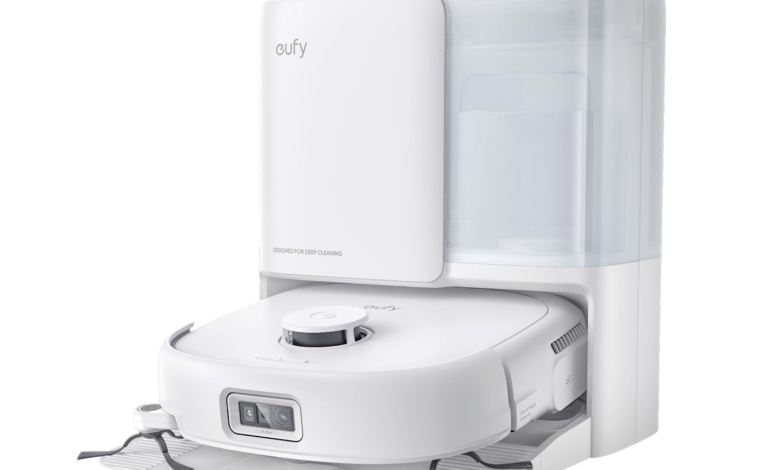
This is where the MOVA V50 Ultra Complete and its innovative Auto-Mop Detachment technology change the game. Instead of trying to “tuck” the dirty mops away, the system utilizes its base station to physically remove them before the vacuuming cycle on carpets begins.
This represents a shift from “logic-based avoidance” to “physical isolation.” When the robot identifies a carpet-heavy cleaning task, it returns to its dock, uncouples the mopping modules, and leaves them behind. It then heads back to the living room as a pure, lightweight vacuum cleaner.
The advantages for white carpet owners are absolute:
- Zero Moisture Transfer: There is no physical possibility of a damp pad touching your carpet.
- Maximum Agility: Without the weight and bulk of the mopping assembly, the robot can navigate carpeted edges with greater precision.
- Deep Fiber Access: Without the mop pads obstructing the underside, the vacuum intake can get closer to the carpet surface, ensuring that the airflow is directed exactly where it’s needed.
Suction Power: The 24,000Pa Revolution
While keeping carpets dry is the first priority, cleaning them deeply is the second. Carpets act as giant filters for a home, trapping everything from microscopic allergens to heavy outdoor debris like winter salt and sand.
Standard robot vacuums usually offer suction between 4,000Pa and 8,000Pa. While sufficient for hardwood, this barely scratches the surface of a thick rug. The MOVA V50 Ultra breaks industry records with a staggering 24,000Pa suction power.
Why does this matter for white carpets? Light-colored fibers show “shadowing” when dust settles deep at the base of the pile. This isn’t staining; it’s simply accumulated grit that standard vacuums can’t reach. With 24,000Pa of pressure, the vacuum creates a high-velocity vortex that can pull heavy particles like the salt used on icy Canadian sidewalks or fine pet dander from the very bottom of the carpet backing. This deep-cleaning capability extends the life of the carpet and maintains its bright aesthetic for years longer than traditional cleaning methods.
Overcoming the “Threshold” Barrier
Another common frustration for owners of premium rugs is the “threshold” problem. Many high-quality rugs are thick enough to act as a physical barrier. It is common to find a robot vacuum stranded at the edge of a rug, its wheels spinning fruitlessly against the carpet’s border.
Most robots are designed to climb obstacles of about 2cm. The MOVA V50 Ultra re-engineered this aspect of robotic movement, boasting a 6cm obstacle climbing capability. This isn’t just about door sills; it’s about the seamless transition from a slick marble floor to a plush, high-pile area rug. This ensures that the robot doesn’t just clean the “easy” parts of your home but provides a truly hands-off, “complete” cleaning cycle across every texture and level.
The Hygiene Loop: Self-Cleaning and Rapid Drying
The danger to a white carpet doesn’t always come from the carpet itself it often comes from a “stale” robot. If a robot’s mopping pads aren’t cleaned and dried properly, they become a breeding ground for bacteria and mold. When that robot eventually maneuvers near a carpet, those spores can migrate.
A truly sophisticated system must be self-sustaining. The MOVA V50 Ultra’s base station doesn’t just store the robot; it maintains it. After a mopping session on hard floors, the station uses a self-cleaning washboard to scrub the pads. More importantly, it employs 1-hour rapid heat drying.
By ensuring the pads are bone-dry and sanitized in just 60 minutes, the system prevents the “sour” smell often associated with automated mops. For the homeowner, this means the air in the home stays as fresh as the floors look, and there is no risk of cross-contaminating the textile surfaces with bacteria from the hard floor cleaning cycle.
Pressure Where It Matters: The 8N Scrubbing Factor
Of course, a home isn’t just carpets. The reason we use “all-in-one” robots is to handle the transition between the kitchen and the living room. On hard surfaces, the MOVA V50 Ultra utilizes 8N pressurized mopping.
In the past, robots simply “wiped” the floor. 8N (approximately 800 grams of downward force) simulates the pressure of human scrubbing. This ensures that sticky spills or dried mud are agitated and lifted, rather than just smeared. When combined with the subsequent auto-detachment before hitting the rugs, you get a home where the tile is polished to a shine and the carpets remain untouched by the mess.
Conclusion: Investing in Asset Preservation
For many of us, our homes are our greatest investments, and the interiors we choose reflect our lifestyle and attention to detail. A high-value white carpet is a statement piece, but it requires a specific maintenance strategy.
The evolution from “mop lifting” to Auto-Mop Detachment is more than just a clever engineering tweak; it is a fundamental shift in how we approach home hygiene. By choosing a system like the MOVA V50 Ultra Complete, homeowners are no longer compromising between the convenience of automation and the preservation of their delicate textiles.
If you are tired of seeing “tide marks” on the edge of your rugs or worrying about your robot dragging a damp cloth across your luxury wool carpet, it’s time to look beyond the lift. The future of floor care is physical separation, extreme suction, and a vacuum that knows exactly when to let go.